Position Paper
April 2024
Chronology of Ban Asbestos Network of India (BANI)'s work (April 2002-April 2024)
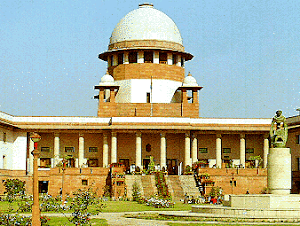
2001: Prior to the formation of Ban Asbestos Network of India (BANI), its co-founder wrote about adoption of WTO’s Appellate Body’s report on European Communities-Measures Affecting Asbestos and Asbestos-Containing Products by WTO’s Dispute Settlement Body and the Report of WTO’s Dispute Resolution Panel, as modified by the Appellate Body report at its meeting on 5 April, 2001. It made it clear on 11 April, 2001 that the report of the Dispute Resolution Panel should be read in conjunction with the Appellate Body’s report. Asbestos producers like Canada lost the case for continued trade in white chrysotile asbestos, a carcinogenic mineral fiber. India took a position inconsistent with the judgement of the Supreme Court of India at the WTO. WTO’s Tribunal’s findings were reported by him as White ruling:France wins a landmark ruling on asbestos against Canada.
April 2002: BANI was formed on April 22 to work with concerned villagers, city folks, peoples movements, doctors, researchers and activists besides trade unions, human rights, environmental, consumer and public health groups for asbestos free India. BANI seeks accountability from public institutions, criminal liability for companies besides preventive and medico-legal remedies for victims of asbestos related diseases. BANI is working for the implementation of Indian Supreme Court’s judgement of 1995 which deals with asbestos related diseases, compensation and ILO’s resolutions. It follows a trail of exposure, which extends the chain of carcinogenic risk beyond the workplace regardless of location of exposure.
September 2003: BANI attended three day international conference on Canadian Asbestos: A Global Concern in Ottawa, Canada. BANI expressed its support for the listing of chrysotile on UN’s Rotterdam Prior Informed Consent (PIC) Convention because it alerts potential importers that chrysotile asbestos is a known cancer-causing agent, which poses a risk even at very low levels. Down To Earth acknowledged BANI’s work. Toxics Dispatch publishes White asbestos: the silent killer.
BANI Condemns Indian Government's Double Speak on Asbestos
2004: BANI presented a paper entitled “The Plight of Asbestos Victims in India” on the plight of workers at the Global Asbestos Conference 2004 held at Tokyo from November 19 through 21, 2004, with an attendance of about 800 people, including 120 from 40 countries and regions overseas. Tokyo Declaration was adopted in view of the devastating health effects of all forms of asbestos. A Joint Declaration from the International Building Trade Union Federations including the International Federation of Building and Wood Workers (IFBWW), the World Federation of Building Workers (WFBW) and the International Union of Building and Wood Workers (UITBB) was made at the Global Asbestos Congress, Tokyo to actively promote the global ban of all forms of asbestos from the construction industry and from all other industrial sectors, and to promote the effective regulation of work with in -situ asbestos in demolition, conversion, renovation and maintenance works by law.
International Ban Asbestos Secretariat (IBAS) acknowledged BANI’s work in its report entitled Indian Tax Breaks for Asbestos Producers.
Business Standard publishes Say no to white asbestos
2005: Dr. Barry Castleman’s book Asbestos: Medical and Legal Aspects refers to BANI’s work. Down To Earth cites BANI’s position on asbestos.
Toxics Dispatch publishes Asbestos kills everyone but us
2006: Frontline published Killer mineral acknwledging BANI’s work.
Chrysotile asbestos: hazardous to humans, deadly to the Rotterdam Convention published by the Building & Woodworkers International and the International Ban Asbestos Secretariat. It includes a chapter entitled India’s Position on Chrysotile Asbestos Dictated by Vested Interests!
BANI’s article entitled “White asbestos, a health time bomb” published. BANI pointed out that Alang ship-breakers disabled by asbestos.
2007: Parliament publishes report of Parliamentary Petitions Committee on entry of asbestos laden end-of-life ship in Indian territorial waters. The Parliamentary Committee recommended that the Ministry should “strongly campaign to create awareness amongst the people about the ill affects of asbestos.”
BANI’s submission to Independent Peoples Tribunal on the World Bank Group on the subject of “Continued trade and use of asbestos in India and World Bank”
BANI opposed the proposal to lift the ban on mining of asbestos, the cancer causing mineral fiber. Asbestos Free India journal (www.asbestosfreeindia.org) arrives in cyberspace.
2008: Asbestos in modern times: Industrial production, processing, prohibition, substitution and disposal, the book by Wolfgang E. Höper acknowledges BANI’s work.
BANI co-published India’s Asbestos Time Bomb book and contributed a chapter in it. BANI’s write-up entitled “A government under an asbestos roof” published in Indian Journal of Occupational and Environmental Medicine and available at https://tspace.library.utoronto.ca/bitstream/1807/57729/1/oe08014.pdf
2009: BANI’s co-founder interviewed for 2009 documentary Asbestos: Canada's Dirty Secret by CBC, a Canadian public broadcast service.
2010: German Radio refers to BANI’s work in its story entitled New revelations about asbestos use in India.
As a consequence of Supreme Court verdict of 1995, the occupational health surveillance program was to include exposure data at each pertinent work place, periodical examination of workers, X-ray examination for radiological changes, lung function test for restrictive disorder and clinical examination for early detection of signs of asbestosis and other asbestos related diseases like mesothelioma and lung cancer. These tests are to be recorded for pre-employment, periodic surveillance and at cessation of employment as per the concerned state government regulations. BANI exposed the preparation of the conflict-of-interest ridden Environmental Impact Assessment (EIA) Guidance Manual– Asbestos Based Industries published by the Ministry of Environment & Forests prepared by Administrative Staff College of India (ASCI), Hyderabad. The role of V. Pattabhi, ex-Executive Committee Member, Asbestos International Association and ex-BIS Sectional Committee Member who “prepared the EIA guidance manual on Asbestos Based Industries” along with Mr. G Bala Subramanyam, Advisor, Environment Area, ASCI, Hyderabad makes the manual questionable and unreliable. Not surprisingly, the manual ignores specific directions of the Supreme Court with regard to ILO’s resolution and compensation to the victims of the asbestos related diseases. The EIA Guidance Manual ignores the recommendations of WHO on elimination of all kinds of asbestos including white chrysotile asbestos.
The Asia-Pacific Journal cites BANI’s work in its paper entitled “The Other Deadly White Dust: Russia, China, India and the Campaign to Ban Asbestos”.
International Consortium of Investigative Journalists interviews BANI and publishes a story entitled India's expanding use of asbestos brings dire warnings.
2011: National Human Rights Commission (NHRC) issued notices on “Banning use of white asbestos”, to all states and territories along with several Union Ministries and asked them to file a status report on a complaint alleging that around 50,000 people die every year in the country due to asbestos related cancer. The complainant has also requested for grant of a compensation package for present and future victims of asbestos related diseases. The NHRC issued notices to secretaries of Ministries of Chemical Fertilizers, Environment and Forest, Health and Family Welfare, Industry and Commerce, Labour and Chief Secretaries of the States on 28/06/2011.
Nine Left parties organize ‘Mahadharna’ in support of ban on asbestos plants
Andhra Pradesh High Court decided case related to Google India Pvt. Ltd. vs. Visaka Industries Limited
Inter Press Service cities BANI's role in anti-asbestos struggle in Bihar in its story entitled INDIA: Agitation Challenges Asbestos Import
BANI’s struggle with Khet Bachao Jeewan Bachao Jansangharsh committee and Paryawarn Bachao Jeewan Bachao Sangharsh Samiti in the remote villages of Bihar led to the stoppage of the following asbestos based plants in Bihar:
1. Tamil Nadu based Nibhi Industries Pvt. Ltd’s Plant at Giddha, Ara, Bhojpur
2. Telangana based Hyderabad Industries Ltd’s plant at Kumarbagh Industrial Area, West Champaran
3. West Bengal based Balmukund Cement & Roofings Ltd’s plant at Chainpur-Bishunpur, Marwan, Muzaffarpur
4. West Bengal based Utkal Asbestos Limited (UAL)’s Plant at Goraul, Vaishali
5. Rajasthan based A Infrastructure Ltd’s Plant at Pandaul Industrial Area, Madhubani
Bloomberg publishes In India, Slum Roofing Is Cheap—and Deadly acknowledges BANI’s position.
New Delhi Declaration seeking elimination of all forms of Asbestos including Chrysotile from India adopted on March 24, 2011. It was endorsed by Prof (Dr) Arthur Frank, Professor, Dr Alec Farquhar, Professor Elihu D Richter, Dr Yael Stein, Dr Lyle Hargrove, Prof (Dr) Qamar Rahman and Dr. T.K. Joshi.
2012: NHRC sought additional information on 05/03/2012, 21/05/2012, 30/07/2012, 15/10/2012, 31/12/2012, 08/04/2013 from the Chief Secretary of all the States regarding banning white chrysotile asbestos. NHRC's order dated 15/10/2012 reveals that "Asbestos Cement Products Manufacturers Association has desired to appear before the National Human Rights Commission to present their case. Registry to inform the Association to appear before the Commission on 31st December, 2012".
The Hindu publishes “Invader in white”citing BANI’s work.
Odisha village wins case against Visaka Industries' asbestos plant, district administration approves Parmanpur panchayat’s decision to cancel no objection certificate to the company.
Patna Declaration seeking environmental, occupational health infrastructure and prohibition on all forms of asbestos based products was adopted on December 24, 2012.
2013: NHRC called for additional information from Asbestos Cement Products Manufacturers Association on 05/08/2013.
Down To Earth acknowledges BANI’s co-founder in India reverses stand on asbestos at Rotterdam Convention meet: Opposes its inclusion in prior informed consent list; campaigners accuse industry lobby of influencing government
Business Standard quotes BANI in its story on ship breaking
2014: Industrial Material, a book referred to BANI’s work.
2015: The Dollar Business publishes the interview of BANI’s co-founder.
2016: Cases of Conflict: Transboundary Disputes and the Development of International Environmental Law, by Allen L. Springer published by University of Toronto Press acknowledges BANI’s work.
The Asian Age reports Bihar revokes clearance for asbestos factories
NHRC's order dated August 8, 2016 referred to a meeting by Ananth Kumar, the Minister of Chemicals and Fertilizers (26 May 2014 – 12 November 2018). The order reads: “Pursuant to the directions of the Commission, Dr.Rohit Misra, Assistant Industrial Advisor, Ministry of Chemicals & Fertilizers, Deptt. of Chemicals and Petrochemicals, Govt. of India vide letter dated 4th July, 2016 has informed the Commission that in order to take an appropriate and scientific stand in the International Forum on the issue related to health hazards posed by Chrysotile variety of Asbestos, Department of Chemicals and Petrochemicals had entrusted National Institute of Occupational Health (NIOH) to carry out a study on Health Hazards/Environmental Hazards resulting from the use of Chrysotile variety of Asbestos in the country. Later, with the approval of MoS (Ind. Charge) Chemicals & Fertilizers, it was decided to set up an Inter-Ministerial Committee for considering the issue of continuance or otherwise of the use of Chrysotile variety of asbestos in India, taking into account of NIOH report and other related issues. On 27.8.2014, a meeting was held under the Chairmanship of Minister (Chemicals & Fertilizer) to consider the NIOH report. It was decided in the meeting that the NIOH report does not indicate any significant health/environment hazards resulting from the use of Chrysotile asbestos under proper conditions, coupled with the fact that asbestos products are quite cost effective for use by the masses, India may not support the inclusion of Chrysotile in Annexure-III at the COP Meeting in 2015. In the light of the above report, no further action by the Commission is called for. The case is closed."
The complainant had drawn the attention of the NHRC " towards the death of approximately 50000 people every year in the country due to Asbestos related cancer. He has alleged that white Asbestos is a fibrous material used for building roofs and walls and various other forms. The complainant has sought Commission's intervention for a ban on the use of Chrysotile Asbestos(White Asbestos), which is hazardous for the health of people and causes various incurable diseases. Citing the contradictory position of the Government on the issue, he has alleged that though the mining of Asbestos has technically been banned by the government but it allows its import and that too from the countries which do not prefer its domestic use. The complainant has also requested for grant of a compensation package for present and future victims of Asbestos diseases." NHRC's order does not address these concerns.
BANI's co-founder gave a speech about ‘Asbestos Usages and Diseases in India’ a the 3rd International Conference on Occupational & Environmental Health was held during 23rd-25th September 2016 at National Institute of Health and Family Welfare (NIHFW), New Delhi (Ministry of Health & Family Welfare, Govt. of India). BANI's co-founder criticized the inconsistencies between various departments in India regarding asbestos, mainly labour, chemical and environment. The compensation is not properly given to the victims. He insisted that the buildings associated with asbestos must be registered and the register should be maintained. Shockingly, no building in India is asbestos free. Liabilities must be fixed on the industries to compensate workers and victims of ARDs and a fund must be established for the same. He regretted that the local & rules have not been updated to date and international standards. The organisations must be held criminally liable for any mishaps due to asbestos. He also spoke on "Status of enviro-occupational health of workers in hazardous industries: An inquiry into asbestos industry" in the session on Occupational Diseases.
The Supreme Court sought assistance from the Attorney General of India in a case involving the liability of intermediaries like Google, for the content posted on their sites by the account holders.The case pertained to the write-up by BANI. LiveLaw reported about the hearing in Google v. Visakha Industries Ltd. LiveLaw publishes interview of BANI’s co-founder.
2017: Parliament was informed that import of asbestos from countries like China, Russia, Kazakhstan and Brazil declined in the last three financial years on December 28, 2017. The import fell to 310000 tn in the financial year 2017. Total asbestos imports from Russia, Kazakhstan, Brazil, China and other countries dropped to 310,570 tonnes in 2016-17 from 396,470 tonne in 2014-15 and 355,660 tonnes in 2015-16. The import/export of asbestos mineral fiber is regulated through EXIM policy of the Directorate General of Foreign Trade under the Ministry of Commerce and Industry.
LiveLaw published Calcutta High Court’s Order Paves Way For Asbestos Free West Bengal & India
BANI’s co-founder wrote an article entitled India must ban asbestos urgently.
Site Environmental & Remediation Services (SERS), an Australian entity cites BANI’s work in its How Different Countries Tackled the Asbestos Issue.
2018: Ananth Kumar (59), Union Minister (Chemicals & Fertilizer) who had chaired the meeting August 27, 2014 which decided that the NIOH report does not indicate any significant health/environment hazards resulting from the use of Chrysotile asbestos under proper conditions, died at Shankara cancer hospital in Bengaluru on November 12, 2018. He had been on the ventilator in the Intensive Care Unit for the last few days. Ananth Kumar was suffering from lung cancer and had returned from the US in October 2018 after treatment in New York. He was undergoing treatment in the UK as well. "He was in the advanced stage of lung cancer," said Dr. B. N. Srinath, an oncologist and managing trustee of the hospital and a close family friend. His health deteriorated in the last seven months. The initial symptoms began with bouts of coughing in April, 2018. He had difficulty in translating the Prime Minister’s speech during an election rally as he was bogged down by coughing. The possibility of his lung cancer being linked to exposure to carcinogenic asbestos fibers has not been ruled out. In his early years, he used to live in a railway quarter which had asbestos roofs. Ananth Kumar's father Narayan Sastry was a railway employee. They were settled in Hubali for many years at MTS railway quarters for workers in 1970-80. He spent his childhood over there. He completed his matriculation in Lamington School and pre-university course in science P.C. Jabin College in Hubli. He earned bachelor's degree in arts from Kadasiddeshwar Arts College and in Law from JSS Law college, in Hubli.
Admittedly, the NIOH study which he had approved was co-sponsored by the chrysotile asbestos based companies and the ministry of chemicals and fertilizers. Its findings cannot be relied upon for the protection of public health. Statement of scientists dated March 21, 2015 on the ‘scientific’ study by NIOH entitled ‘Study of Health Hazards / Environmental hazards resulting from use of Chrysotile variety of Asbestos called on the Government of India to withdraw a discredited scientific study on chrysotile (white) asbestos and to stop blocking the listing of chrysotile asbestos as a hazardous substance at an upcoming UN meeting. The ‘Study of Health Hazards / Environmental hazards resulting from use of Chrysotile variety of Asbestos in the country’, carried out by the NIOH (India), states that it found no evidence that chrysotile asbestos is causing harm to the health of workers in India. “The study has no scientific credibility,” stated Dr. Philip Landrigan, President of the Collegium Ramazzini and Dean for Global Health, Icahn School of Medicine, Mount Sinai, New York. “It is flawed in the design, methodology and interpretation of the results,” he added.
The statement pointed out that the photos in the study show some workers wearing a cotton scarf tied around their face as their only “safety equipment”. The study also shows workers weaving asbestos cloth. This is one of the most hazardous uses of asbestos. The statement of scientists on the ‘scientific’ study reads: “We would like to strongly state that the ‘claim’ being made by the government of India regarding the ‘safety’ of Chrysotile asbestos is unacceptable to any credible scientists or scientific community. The world scientific community has overwhelmingly concluded that Chrysotile asbestos causes deadly diseases, such as asbestosis, mesothelioma and lung and other cancers, and that it cannot be safely used.” It concludes saying, “We therefore request the Government of India to withdraw the NIOH study, which does not hold up to any credible scientific scrutiny and do the right thing by supporting the listing of Chrysotile asbestos at the upcoming UN conference.” The Union Government has been using the study as the reason for continued trade, manufacture and use of all kinds of asbestos including white chrysotile asbestos and for opposing the listing of chrysotile asbestos under UN’s Rotterdam Convention.
BANI’s co-founder presented a paper entitled “Research on Chrysotile Asbestos: Failure of Ethics by National Institute of Occupational Health (NIOH) and National Human Rights Commission (NHRC)” at 14th World Congress of Bioethics & 7th National Bioethics Conference in Bengaluru, Karnataka during 5-6 December, 2018.
Hindustan Times story Railways are phasing out asbestos, a suspected health hazard cites BANI's work.
On January 1, 2018, the Minister of Commerce and Industry was asked in the Lok Sabha as to whether the Ministry of Commerce & Industry has approached the Union Finance Ministry to provide incentives to the alternatives of asbestos in order to refrain from making asbestos artificially cheaper as has been done in the past. The minister replied in the negative.
2019: Unmindful of public health consequences, BANI pointed out that the irrationality of India being the biggest importer of Russian asbestos despite the fact that mining of Indian asbestos has been banned.
BANI’s co-founder spoke as a panelist on “Deadly Propaganda: Asbestos Imports, Use and Deaths” and on “Breathless”, a Documentary Screening at George Washington University, Washington D.C. and at 15th Annual International Asbestos Awareness and Prevention Conference of ADAO in the Session on Global Advocacy.
A book Asbestos: Inside and Outside, Toxic and Haptic published by Duke University Press cites BANI’s work.
2020: BANI disclosed the removal of its paper on the Union Government’s position on asbestos by the Labour Ministry. The paper was presented at India-EU Seminar 2011. Asbestos ridden talc powder withdrawn in North America, why not in India?
India remained the biggest importer of Russian asbestos disregarding scientific evidence and the recommendations of WHO under Russian influence.
2021:"Study to understand functioning of companies’ response systems vis-à-vis key Human Rights violations available in Public Domain" by Partners in Change and National Human Rights Commission (NHRC) cites BANI’s work. BANI’s co-founder spoke at the event of California based Asbestos Disease Awareness Organisation (ADAO) on The Global Asbestos Fight for Human Rights and Justice
2022: The Guardian story ‘We are all exposed to it’: the human face of India’s asbestos time bomb” acknowledges BANI’s work.
The news story by Al Jazeera "Why does India still use and trade asbestos?" refers to BANI's work
Mongbay story entitled The ghost of asbestos mining continues to haunt this tribal village in Jharkhand cites BANI’s work. Asia News interviewed BANI’s co-founder for its story entitled “New Delhi still imports asbestos, risking 50,000 deaths a year”. National Human Right (NHRC)republished Scroll story Four decades on, a village in Jharkhand is still haunted by the ghost of asbestos mining.
India is part of Indo-Pacific Economic Framework for Prosperity (IPEF) launched by USA in 2022 with 14 trading partners in Asia, Oceania and North America which will work to "prevent asbestos-related diseases and to promote transition from the use of asbestos to safer alternative products in IPEF supply chains.”
2023: The article entitled “Lessons for India from Swiss asbestos tycoon found guilty for causing death of 392 people” published.
2024: BANI’s co-founder wrote an article entitled “India 'continues' carcinogenic asbestos use, trade, manufacture amidst US import ban”. BANI revealed how the Government of India was fooled into buying asbestos laden property in Washington D.C.
BANI’s struggle to save villagers from Tamil Nadu based Ramco Industries Ltd’s Plants at Industrial Area, Bihiya, Bhojpur, Bihar underway. Its two factories of 1,20,000 MT/Annum Capacity of Asbestos Cement Sheet Plant (with clearance) and 2 Lakh MT/Annum Capacity of Cement Grinding (without clearance) is functional despite Chief Minister’s promise for an asbestos factory free Bihar. The company gave Rs 5,000 for “Death of a dead worker”. It silenced the workerss protest. The villagers continue to suffers due to air pollution, water pollution and disposal of asbestos waste of the company.
BANI exposed the sophistry of Asbestos Fiber Cement Product Manufacturers Association, a cartel of asbestos based companies which has referred to a “National Study on Occupational Safety, Health and Working Environment in Asbestos Cement Product Industries” covering 50 functional asbestos cement product industries of the country carried out by the Directorate General Factory Advice Service and Labour Institutes (DGFASLI) under the Ministry of Labour and Employment. This study found that out of 2603 workers, 10 cases were suspected cases of asbestos related disorders. This study came under scrutiny of a paper entitled “Analysis of the Indian Government’s position on the use of asbestos and its health effects” published in Public Health Action (June 21, 2023) by Dr. R. Singh and Prof. A. L. Frank. The paper concludes that the DGFASLI “study has some potential limitations, including the possibility that disease latency could be a factor, as the presence of disease may only be revealed decades after exposure. Furthermore, there appears to be no record of external peer review by an organisation outside the one conducting the study.”
BANI has pointed out that in its submission before the National Green Tribunal, India's Asbestos Fiber Cement Product Manufacturers Association refers to judgement of 1995 by the Supreme Court in Consumer Education Resource Centre v. Union of India but omits significant part of the directions with regard to ILO resolution concerning Asbestos and the compensation to the certified victims in order to mislead the National Green Tribunal. This dishonest and insincere approach of the asbestos companies and DGFASLI demonstrates "their pre-existing ideological commitment to support corporate interests over worker or community interests." The Supreme Court in Writ Petition (Civil) No.206 of 1986 had given the following directions on January 27, 1995. It reads: “All the industries are directed
(1) To maintain and keep maintaining the health record of every worker up to a minimum period of 40 years from the beginning of the employment or 15 years after retirement or cessation of the employment whichever is later;
(2) The Membrane Filter test, to detect asbestos fibre should be adopted by all the factories or establishments at par with the Metalliferrous Mines Regulations, 1961; and Vienna Convention and Rules issued thereunder;
(3) All the factories whether covered by the Employees State Insurance Act or Workmen's Compensation Act or otherwise are directed to compulsorily insure health coverage to every worker;
(4) The Union and the State Governments are directed to review the standards of permissible exposure limit value of fibre/cc in tune with the international standards reducing the permissible content as prayed in the writ petition referred to at the beginning. The review shall be continued after every 10 yews and also as an when the I.L.O. gives directions in this behalf consistent with its recommendations or any Conventions;
(5) The Union and all the State Governments are directed to consider inclusion of such of those small scale factory or factories or industries to protect health hazards of the worker engaged in the manufacture of asbestos or its ancillary produce;
(6) The appropriate Inspector of Factories in particular of the State of Gujarat, is directed to send all the workers, examined by the concerned ESI hospital, for re-examination by the National Institute of Occupational Health to detect whether all or any of them are suffering from asbestosis. In case of the positive Ending that all or any of them ant suffering from the occupational health hazards, each such worker shall be entitled to compensation in a sum of rupees one lakh payable by the concerned factory or industry or establishment within a period of three months from the date of certification by the National Institute of Occupational Health."
The members of the India's Asbestos Fiber Cement Product Manufacturers Association have not been complying with these directions of the Supreme Court. They are trying to mislead the Tribunal by withholding the full text of the landmark judgement of the Supreme Court which has recognised right to health as part of fundamental right to health.
The word "Asbestos" has become so notorious that Asbestos Cement Products Manufacturers Association has changed its name to hide the word "Asbestos". Now it calls itself "Fiber Cement Product Manufacturers Association"! But in their naked lust for profit they will have present and future generations of Indians and residents in India including the foreign embassies and foreign visitors whose countries have banned all kinds of asbestos, that foreign asbestos is “safe”. Notably, the government of India has banned mining of all kinds of asbestos due to its harmful effect on human health. The Asbestos Fiber Cement Product Manufacturers Association will have media, legislatures and courts and residents of India believe that Indian asbestos is unsafe, hazardous, poisonous and harmful but asbestos from Russia, Brazil, Kazakhstan and China is safe, non-hazardous, non-poisonous and harm free.
India is the world’s largest asbestos importer and consumer. As per United States Geological Survey, India used 408,000t in 2021 and 424,000t in 2022. As per Government of India, India imported 436,119t in 2021 and 403,292t in 2022. Indian Minerals Year Book reveals that although India banned mining of all kinds of asbestos including chrysotile asbestos due to its harmful health effect but it continues to import it from China besides Russia, Kazakhstan and Brazil unmindful of the fact that Brazilian court has banned its use in Brazil.
The Asbestos Fiber Cement Product Manufacturers Association will have all Indians believe that the governmental patronage they are enjoying is not linked to their donations to ruling parties under Section 182 of the Companies Act, 2013.
BANI’s work is dedicated to the implementation of the Court’s directions and the recommendations of ILO and WHO to prevent preventable diseases and preventable deaths by prevention of asbestos trade, manufacture and use. It demands revision of the provisions of the Factories Act, 1948 which declare manufacture, handling and processing of Asbestos and its products as Hazardous Process but do not impose ban on manufacture, handling and processing of asbestos and asbestos based products. It seeks amendment in the Schedule XIV, Section 87 of the Factories Act which deals Dangerous Operation of “Handling and Processing of Asbestos, Manufacture of any Article or Substance of Asbestos and any other Process of Manufacture or otherwise in which Asbestos is used in any Form’ to ensure that India supports listing of chrysotile asbestos under list of hazardous substances as per UN’s Rotterdam Convention. BANI demands cancellation of all the environmental clearances and No Objection Certificates given to asbestos based factories and ban on all asbestos based products. It seeks legal and medical relief for the victims of incurable asbestos related diseases caused by primary and secondary exposure. It wants asbestos free schools and hospitals, asbestos free powder, asbestos free water supply pipes and asbestos free vehicles. It demands decontamination of all the public and private buildings including foreign embassies which are ridden with asbestos fibers. The decision making with regard to asbestos must be shifted from the commerce ministry, a promoter of trade in asbestos, to the health ministry, a regulator of health hazards. The latter must be empowered to ensure that it gives precedence to public health.